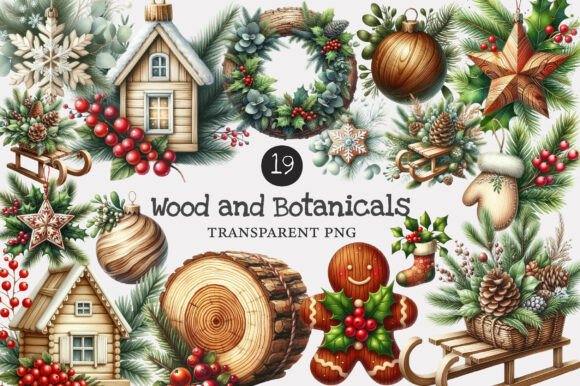
Christmas Wood and Botanicals Clipart for Brand Identity
As a brand designer who has spent years helping local businesses build their visual identity, I approach every new graphic design asset with a critical eye. It is not enough for an illustration to simply look "nice." It must serve a function, convey a specific mood, and hold up under the scrutiny of real-world application. When I first pulled up the Christmas Wood and Botanicals Clipart, I immediately thought about the upcoming holiday season for small retailers, bakeries, and artisanal brands. This set does not just offer festive decoration; it offers a cohesive narrative that can elevate a local business from amateur to professional.
The immediate impression of this Illustrations pack is one of grounded warmth. Unlike the neon-bright, overly digital clipart that saturates many marketplaces, these designs feel tactile. They evoke the scent of pine, the roughness of bark, and the softness of dried botanicals. For a small business branding project, this translates to a personality that is trustworthy, organic, and inviting. It suggests a brand that cares about quality and craftsmanship, making it ideal for handmade business owners who want to communicate authenticity before the customer even reads a single word on their product.
Setting the Mood for Local Business Branding
In my experience, the most successful local business identities rely on emotional connection. A bakery selling gingerbread cookies or a skincare brand offering winter body butters needs visuals that trigger sensory memories. The Christmas Wood and Botanicals Clipart achieves this by leaning into rustic elegance. It avoids being too playful or childish, which makes it versatile enough for adult-focused products like wine labels, premium candles, or boutique home decor.
When evaluating any design assets for a client, I ask: Does this support the brand’s core values? If your brand is about slow living, natural ingredients, or traditional craftsmanship, this clipart aligns perfectly. It creates a visual hierarchy that guides the eye naturally toward the product name while framing it with seasonal charm. It feels premium because it uses negative space well and avoids clutter. This is crucial for professional branding, where less often means more.
Real-World Applications in Packaging Design
I recently worked on a conceptual project for a local coffee roaster launching a limited-edition holiday blend. We needed packaging that stood out on crowded shelves without screaming for attention. Here is how the Christmas Wood and Botanicals Clipart can be deployed in actual packaging design scenarios:
- Product Labels: Use the wood textures as background elements behind the logo to create depth. The botanical accents work beautifully as corner ornaments on square jar labels for spices or jams.
- Hang Tags: These are perfect for apparel boutiques or gift sets. A simple kraft paper tag featuring a single botanical sprig from the clipart adds a handmade touch that customers love to keep.
- Thank-You Cards: Include a printed insert with a warm message framed by the wood border. This extends the unboxing experience and reinforces brand loyalty.
- Stickers: Die-cut stickers using the isolated botanical elements are excellent for sealing envelopes or decorating promotional materials.
For food businesses, visual appeal is directly tied to perceived taste. A product label that looks hand-crafted and organic suggests that the contents inside are also natural and carefully made. This clipart supports that narrative effectively.
Extending the Brand Across Marketing Visuals
A strong brand identity requires consistency across all touchpoints. The versatility of this clipart allows you to maintain a unified look from your physical products to your digital presence.
In social media graphics, these illustrations can serve as headers or decorative frames for promotional ads. For example, a flat-lay photo of your product can be overlaid with a subtle wood texture from the pack to tie the image back to your packaging design. In web design, these elements can break up text blocks in blog posts about holiday gifting or behind-the-scenes stories, adding visual interest without distracting from the content.
For marketing visuals such as flyers, posters, and price lists, the clipart provides a clear structure. You can use the larger wood pieces as anchors for headlines, ensuring that your key message is bold and readable. This helps create a stronger first impression, which is vital when capturing the attention of potential customers during the busy holiday season.
Where to Exercise Caution
No single asset fits every scenario. As a designer, I always advise clients to consider context. While the Christmas Wood and Botanicals Clipart is highly effective for rustic, organic, or boutique brands, it may not suit every aesthetic.
Avoid using this illustration for formal corporate branding or luxury minimalist brands that rely on stark, clean lines. It can also become problematic if placed on very small labels where the details might blur, or in layouts that are already crowded with legal information and ingredients. In these cases, the decoration competes with important text, ruining the visual hierarchy. Additionally, test it carefully on low-contrast backgrounds; dark wood tones can disappear against dark colors, so ensure sufficient contrast for readability.
Practical Designer Notes for Implementation
To get the most out of this graphic design asset, follow these practical steps before finalizing your designs:
- Test on Mockups: Always view the artwork on realistic product mockup scenes. How does it look on a glass jar versus a cardboard box? This helps you gauge scale and impact.
- Check Black and White: Preview the clipart in grayscale. If the design relies solely on color to be visible, it may lack the structural integrity needed for print.
- Font Pairing: Experiment with typography. This clipart pairs exceptionally well with serif fonts for a classic look, script fonts for a personal touch, or handwritten fonts for a crafty vibe. Avoid pairing it with overly geometric sans-serifs unless you are aiming for a modern contrast.
- File Format Review: Inspect whether you have access to SVG files for scalability or high-resolution PNGs for transparency. Vector formats allow you to resize elements without losing quality, which is essential for large-format prints like banners or posters.
- Licensing Verification: Before using these assets for commercial design projects, confirm the commercial license. Ensure you are permitted to use them for physical product sales, digital downloads, or both, depending on your business model.
Ultimately, the goal of brand identity work is to build trust. By choosing high-quality, thoughtful design assets like the Christmas Wood and Botanicals Clipart, you signal to your customers that you pay attention to detail. Whether you are a creative entrepreneur launching a new line or a seasoned shop owner refreshing your holiday campaign, this clipart provides the visual foundation needed to connect emotionally with your audience and drive sales through polished, professional presentation.