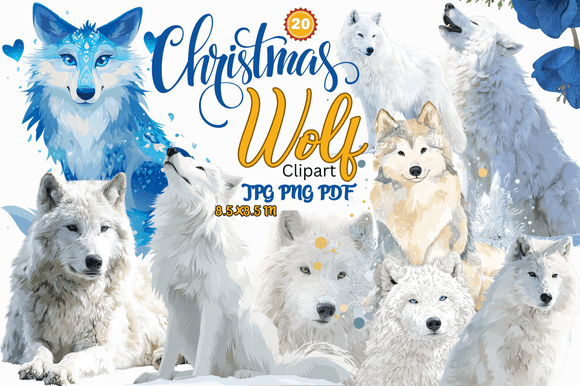
Christmas Wolf Clipart Illustrations
As a brand designer who spends half my day troubleshooting visual hierarchy and the other half arguing with clients about color psychology, I don’t just look at a design asset; I look at its utility. When I first encountered Christmas Wolf Clipart, my initial reaction wasn’t just aesthetic appreciation—it was a quick mental audit of where this illustration could live in a real-world marketing funnel. In an era where attention spans are fragmented and digital clutter is at an all-time high, selecting the right illustration for your campaign is not merely decorative; it is strategic.
This review breaks down how this specific graphic design asset performs when applied to actual branding challenges. Whether you are a small business owner launching a holiday collection, a content marketer building a festive email sequence, or a creative entrepreneur designing printables, understanding the nuance of your visual elements is critical. Here is my professional assessment of how Christmas Wolf Clipart can elevate your marketing visuals while maintaining professional integrity.
The First Impression: Mood and Emotional Resonance
The moment you place this asset on a canvas, it sets a distinct tone. Unlike generic snowflakes or overly saccharine reindeer imagery, a wolf introduces a sense of wildness, loyalty, and mystique, softened by the familiar warmth of Christmas themes. This combination creates a sophisticated emotional hook. It appeals to audiences who appreciate nature-inspired aesthetics, rustic charm, or modern folklore vibes.
For brand identity purposes, this clipart works exceptionally well for brands that want to appear approachable yet distinctive. It avoids the "messy" look that often plagues low-quality clipart collections because the lines are clean and the composition is balanced. If your brand voice is playful but grounded—think handmade skincare, boutique apparel, or artisanal food products—this illustration bridges the gap between seasonal cheer and premium quality. It signals to the audience that you care about detail, which directly contributes to improved audience trust.
Real-World Application: A Seasonal Launch Scenario
To understand the true value of this design asset, let’s frame it within a realistic marketing project. Imagine you are running a small Etsy shop selling winter-themed candles. You are preparing for a Black Friday to Christmas sale. Your goal is to refresh your social media graphics, create a lead magnet (a printable holiday planner), and design packaging inserts.
In this workflow, Christmas Wolf Clipart becomes a versatile cornerstone. Instead of hiring an illustrator for every single post, you use this high-quality PNG design as a recurring motif. On Instagram, you might pair the wolf illustration with a deep forest green background and gold foil text for a product launch visual. For Pinterest pins, you overlay the image with clear, bold typography announcing a discount, leveraging the strong visual hierarchy the illustration provides. The consistency of using this specific character across different touchpoints—from your website header to your email banner—creates a cohesive narrative. It transforms scattered promotional materials into a unified brand experience.
Strategic Use Cases Across Marketing Channels
The versatility of this digital product extends far beyond simple decoration. Here is how it integrates into various aspects of content marketing and visual content creation:
- Social Media Graphics: The illustration’s scale allows it to serve as a hero graphic for Facebook ads or Instagram stories. Its distinct silhouette ensures it stands out in a crowded feed, grabbing attention without requiring complex editing.
- Packaging Design: For physical goods, this SVG design can be scaled for product labels or gift tags. The detailed line work holds up well in print, adding a tactile, premium feel to unboxing experiences.
- Digital Ads and Banners: When used in web design or digital ads, the negative space often inherent in such illustrations allows for easy placement of call-to-action buttons. It supports professional branding by keeping the focus on the offer while providing visual interest.
- Editorial and Blog Content: Bloggers can use this creative design to break up text-heavy articles or to feature in newsletter headers. It adds personality to editorial design without distracting from the core message.
- Printable Designs: As a printable design element, it fits perfectly into holiday coloring pages, greeting cards, or wall art. This opens up revenue streams for creators looking to sell digital bundles.
Where the Asset Shines: Visual Hierarchy and Recognition
One of the primary goals of any brand identity is recognition. By consistently using this unique wolf motif, you build a visual shorthand that your audience will begin to associate with your brand. This modern design asset supports stronger first impressions because it feels curated rather than copied. It enhances visual hierarchy by acting as a focal point that guides the eye toward your text or product.
Furthermore, it fosters an emotional connection. The wolf symbolizes community and instinct, qualities that resonate deeply during the holiday season when people crave connection. By aligning your small business branding with these subtle symbolic cues, you move beyond transactional marketing to relational marketing. The result is more memorable campaign visuals and higher engagement rates.
Cautionary Notes: Where to Exercise Restraint
No single asset is a silver bullet. There are contexts where Christmas Wolf Clipart may not be the optimal choice. For formal corporate branding or financial institutions, the whimsical nature of a wolf might undermine the seriousness required for professional branding. Similarly, in dense information layouts or data-heavy infographics, this illustration could compete with the main message, disrupting clarity.
Be mindful of mobile screens. While the illustration is scalable, ensure that when placed inside small mobile graphics, it does not become pixelated or lose its defining features. Also, avoid placing it on low-contrast backgrounds where the details might get lost. If your brand is extremely minimal, this illustrative style might add too much visual noise; in such cases, consider using it sparingly as an accent rather than a primary element.
Practical Brand Designer Notes for Implementation
To maximize the ROI of this commercial design asset, follow these practical steps before integrating it into your campaigns:
- Test Color Palettes: Place the illustration over your brand’s specific color palette. Does it harmonize? Try it against both warm and cool tones to see how it shifts the mood.
- Check Monochrome Usage: Preview the asset in black and white. This is crucial for embossing, foil stamping, or single-color print runs. Ensure the shape remains recognizable without color reliance.
- Font Pairing: Experiment with typography. This illustration pairs beautifully with serif fonts for a classic look, sans serif fonts for a modern twist, or script/handwritten fonts for a personal, handmade vibe. Avoid display fonts that clash with the illustration’s style.
- Mockup Testing: Always view the asset inside real campaign mockups. Check readability in small sizes and compare it against competitor visuals to ensure you stand out.
- Licensing Verification: Before using this in paid campaigns, client work, or business branding, confirm the commercial license terms. Ensure you have the right to use it for unlimited projects if that is your business model.
In conclusion, Christmas Wolf Clipart is more than just a festive image; it is a strategic tool for enhancing brand identity and driving engagement. By understanding its strengths and limitations, you can deploy it effectively across your marketing visuals, creating a cohesive, trustworthy, and visually stunning presence throughout the holiday season.